
Helping Children Build Capability Through Movement and Everyday Tasks

Getting dressed. Joining a playground game. Carrying a school bag. Climbing into the car.
These everyday activities give children opportunities to practise movement, solve problems and take an active role in their day.
As parents, we often step in because we want to help. Sometimes we’re rushing. Sometimes we can see our child becoming frustrated. Sometimes doing it ourselves has simply become a habit.
There will always be moments when children need us to take over. But there are also opportunities to pause and ask: which part could my child try, and what support would help them succeed?
In episode #102 of Move. Talk. Thrive., Kids Heart Pilates founder and paediatric exercise physiologist Lizzy Dawson explored this question: Are we raising capable kids?
Here’s how families can put that conversation into practice.
Start with something that matters to your child
Choose an activity your child wants or needs to do. It might be climbing onto their favourite playground equipment, getting ready for swimming or playing a ball game with a friend.
Watch where they get stuck.
Does getting dressed become difficult when they have to balance on one leg? Is the playground equipment too high to reach comfortably? Does the ball arrive too quickly for them to catch? Understanding the difficult part helps you choose a useful starting point. For example, your child could sit down to put their shorts on, practise on a lower climbing step, or catch a large, soft ball from a short distance.
Make the task achievable enough for them to have an active role.
Let them do one part
A whole task can feel overwhelming. One part may be manageable. When getting ready for swimming, you might gather the equipment while your child puts it into the bag. Later, they could use a picture list to find the items themselves. When putting shoes on, you might loosen the opening while your child pushes their foot inside and fastens the strap. There is no requirement to remove every support. Look for the next step your child can practise, and adjust the help as their skills develop.
Make movement practice part of the day
You don’t need to turn home into another therapy session. Look for brief opportunities within activities you already do.
Try:
At the playground: Let your child choose a manageable climbing route and offer help at the difficult section.
Before school: Give them responsibility for one item, such as putting their lunchbox into their bag.
During play: Roll, throw or kick a ball together, adjusting the distance and speed so they can take part.
When getting dressed: Allow time to practise one fastening while you help with the rest.
While tidying: Ask them to carry and put away a few suitable toys.
Choose one or two opportunities that fit your family. You don’t need to make every activity a challenge.
Support them through frustration
A difficult moment can be an opportunity to learn, but becoming increasingly distressed is a reason to change your approach.
You might offer a smaller step, demonstrate, help physically or take a break.
Useful language includes:
“Which part wouldyou like help with?”
“I’ll hold this steady while you try.”
“Let’s make it a little easier.”
Notice what your child actually did: “You moved your foot onto the next step yourself.” Specific feedback gives them information they can use on their next attempt.
Capability looks different for every child
Children have different bodies, abilities, developmental pathways and support needs. For one child, progress might mean climbing independently. For another, it might mean choosing how to participate, using adapted equipment or asking for help. The question is: is my child gaining skills, choice and opportunities to participate in things that matter to them?
When extra support may help
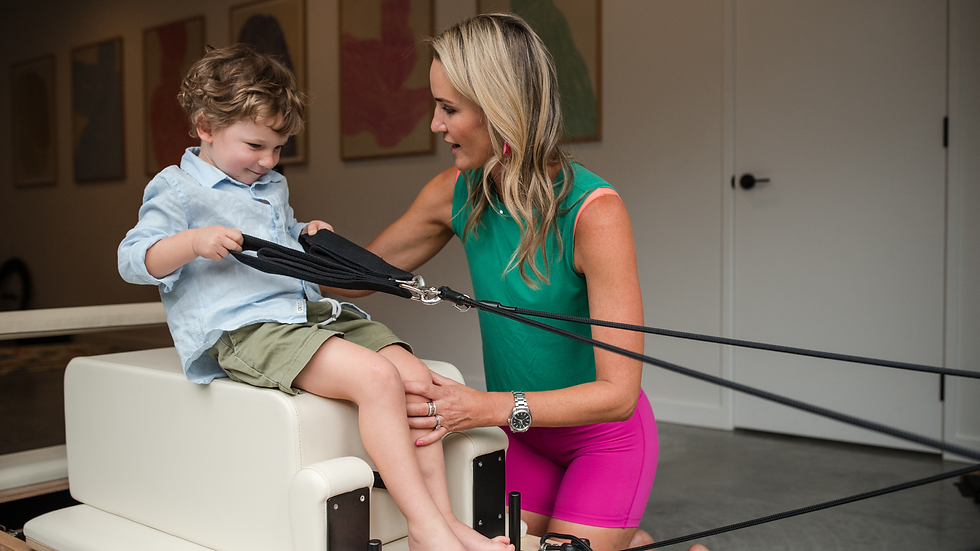
If your child regularly struggles with movement tasks, avoids physical play or finds it difficult to join activities they enjoy, it can help to understand what is getting in the way. At Kids Heart Pilates, our paediatric exercise physiologists work with children and families on movement skills and goals that connect with everyday life.
You’re welcome to contact our team to discuss your child’s needs.
This week, start small: choose one everyday task, give your child a manageable part, and leave enough time for them to try.
Want to hear more?
Listen to Lizzy’s episode, Are We Raising Capable Kids?, on Move. Talk. Thrive.


Comments