
This Is The Clarity You’ve Been Looking For: Our new Gross Motor Assessment

One of the most common things we hear from both families and educators is, “we know something is going on, but we’re not sure what to do next.” A child might be struggling to sit still, not wanting to participate in sport, obsessed with screen time, behaving out, avoiding physical activity generally, becoming easily overwhelmed, or simply finding everyday participation harder than expected. Often there isn’t one clear issue, just a sense that things feel harder than they should be. That uncertainty can make it difficult to know what support is actually needed, and where to begin.
Over many years working in paediatrics both in clinic and early learning centres, I’ve found that one of the most helpful places to start is not with behaviour, or even learning. It’s with movement. At Kids Heart Pilates, we use what we call a Movement Lens to understand how a child is functioning in their day-to-day life. Not just how they move, but how they regulate, sustain effort, interact with their environment and participate in everyday experiences. This gives us a practical way to move from uncertainty to clarity.
This lens is not something we only talk about. It guides all of our work. In our individual sessions, both NDIS and private, it shapes what we are observing, measuring and building over time. In our group and holiday programs, it helps us support confidence, participation and social engagement in a way that feels natural for children. And within early learning centres, it’s the lens we use to observe children in their real environments, support educators and develop strategies that can be used within everyday routines. Across all of these settings, we are asking the same question: what is this child’s movement telling us? And how can we use movement to support this child?!
When we begin to look through this lens, things often start to make more sense. A child who struggles to sit still may actually be working incredibly hard just to maintain posture. A child who avoids playground equipment may not lack confidence, but stability and spatial awareness. A child who becomes overwhelmed during the day may be experiencing fatigue or difficulty regulating their body over time. When these patterns are understood, the way we support the child becomes much clearer and more targeted.
For many families, having a clinical opinion based on some clear data on where their child is at is really helpful. And for an early learning group, this might be what percentage of children are within normal age ranges for certain skills. Because this data gives a clear starting point and picture of why these things are occurring.
It is all about creating movement goals to work toward the functional goals. This is where an assessment can be helpful. And we are just launching a 30min gross motor assessment in our clinic and early learning programs to give us that clear data. These sessions are play-based and fairly relaxed, but give us a clear picture of where your child is at in regards to their motor skills, posture and function. We look at coordination, balance, posture, endurance, confidence and regulation through movement.
From there, we provide a clear summary, practical strategies and guidance on what support might look like, if any is needed. For educators, this same approach can be applied within the classroom or centre environment, helping teams better understand and support the children already in their care.
What This Looks Like Moving Forward
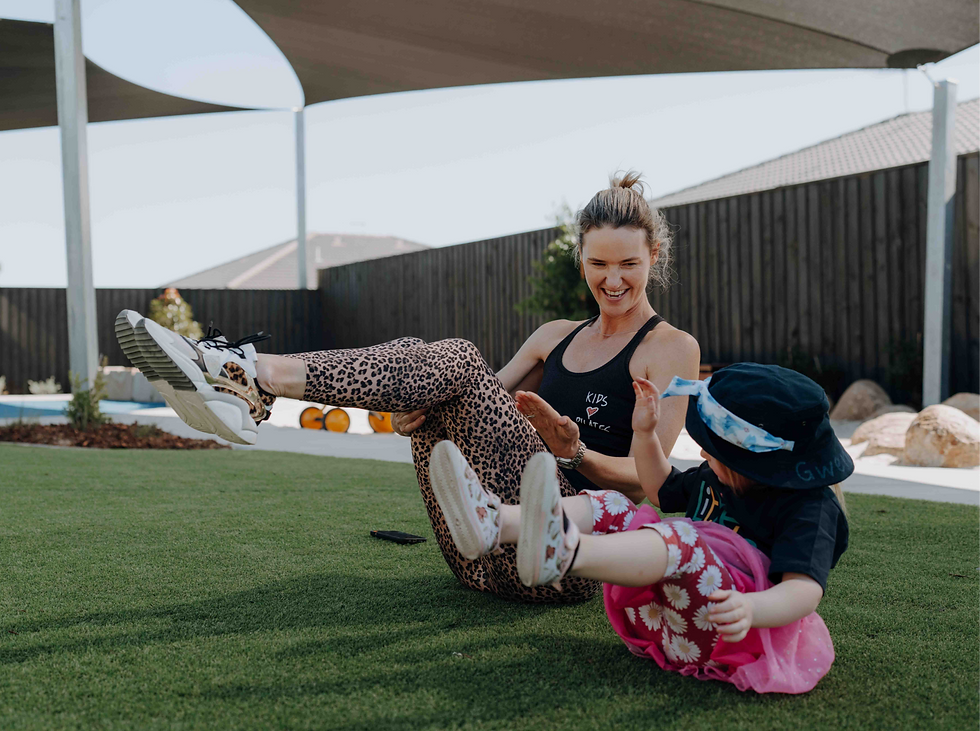
Once we understand a child through a movement lens, the next step becomes much clearer.
For some children, this may mean starting with a gross motor assessment to gain a structured understanding and a clear starting point. For others, it may look like ongoing individual sessions, either privately or through NDIS, where we can build strength, mobility, regulation and confidence over time.
For children who benefit from learning alongside others, our small group and holiday programs provide opportunities to practise these skills in a social and supportive environment. And within early learning settings, this same lens allows us to work alongside educators, supporting them with practical strategies, environment considerations and approaches that fit within their day-to-day routines.
Each pathway is different, but they are all guided by the same principle. Understanding the child first, then building support around what they need.
We are seeing more children who are bright, capable and curious, yet finding participation harder than expected. At the same time, there is growing awareness around early support, which is a positive shift. Starting early is not about labelling children, but about understanding how to support them in a way that feels achievable and sustainable. Often, small changes in movement, confidence and regulation can make a meaningful difference across learning, behaviour, social interaction and independence.
Whether support happens through individual sessions, group programs or within early learning environments, the goal is the same. To understand the child more clearly and provide practical, realistic support that fits into their world. At Kids Heart Pilates, this Movement Lens guides everything we do, because when we have a clear starting point, it becomes much easier to know what to do next.
If you’ve been wondering where to begin, or how best to support a child in your care, our team is always happy to guide you through next steps.
Lizzy Dawson
Founder, Kids Heart Pilates
Accredited Exercise Physiologist
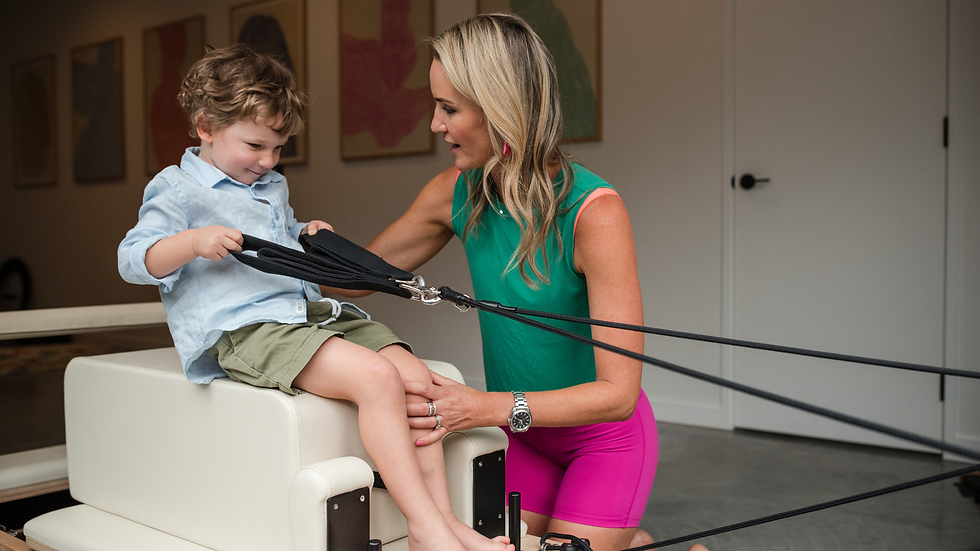


This article presents a compelling framework for understanding children's movement challenges through a Movement Lens. It highlights the importance of assessing not just behavior but physical engagement with their surroundings. Exploring how movement patterns reveal underlying issues could ideally lead to more targeted support. The analogy of a Wild Card City effectively illustrates the complexity of children's needs, emphasizing that starting with a structured assessment can clarify the path forward. The approach seems practical, focusing on individual strengths and community-based solutions.
The article presents a compelling perspective on addressing children's challenges through a Movement Lens. It emphasizes understanding behavior by examining movement, which can unveil underlying issues. However, one must consider the potential oversimplification of problems that might require a more nuanced approach. A balanced view could enhance the effectiveness of programs, making it less about rigid frameworks like a Clubhouse and more about individualized support tailored to each child's unique needs.
The article highlights a critical aspect of child development, especially in understanding the challenges some children face in daily activities. Using a Movement Lens as a framework seems to provide insight into how children navigate their environments. This approach could make a significant difference for children engaged in various activities, like those in a Clubhouse setting, where movement is integral to play and social interaction. Understanding these dynamics can enhance support strategies tailored to each child's unique needs.
Analysis reveals that the scope of the claims is appropriately constrained. Observations remain closely tied to empirical foundations. The website adds depth and nuance to the issues raised here. Behavioural indicators are mapped against platform-level engagement data.